

Starting a journey toward better fitness often begins with a simple goal: moving your body more. To achieve consistent weight loss, find activities you enjoy. This keeps your motivation high over time.
Whether you’re a beginner or a seasoned athlete, knowing how your body uses energy is key. Many find running is a top choice for burning energy in one hour. Other good options include swimming, jogging, and stationary cycling.
If you like variety, try high-intensity interval training, or HIIT. It’s a great way to burn a lot of calories. These short, intense workouts keep your metabolism up even after you’re done. By choosing exercises that fit your lifestyle, weight loss becomes a natural part of your day, not a chore.
Key Takeaways
- Running remains one of the most efficient activities for energy expenditure.
- Swimming and cycling provide excellent low-impact alternatives for your routine.
- HIIT sessions are highly effective for boosting your metabolism quickly.
- Consistency is more important than intensity when starting a new program.
- Finding enjoyable movement is the secret to long-term health success.
Understanding the Science of Caloric Expenditure
Caloric expenditure is about how many calories our bodies burn. This includes the energy needed for basic functions and daily activities. It’s a key part of our health.
Our bodies burn calories in three ways: basal metabolic rate (BMR), physical activity, and the thermic effect of food. The BMR is the biggest part, making up 60-70% of our daily burn. It’s the energy used while resting, like breathing and keeping warm.
The Role of Basal Metabolic Rate
The BMR changes based on age, sex, weight, and genetics. People with more muscle burn more calories at rest. Knowing your BMR helps manage your weight.
“Basal metabolic rate is a critical component of our daily energy expenditure, and understanding its role can help individuals make informed decisions about their diet and exercise routines.”
To estimate BMR, use the Harris-Benedict equation. For men: BMR (calories/day) = 66 + (6.2 * weight in lbs) + (12.7 * height in inches) – (6.8 * age in years). For women: BMR (calories/day) = 655 + (4.35 * weight in lbs) + (4.7 * height in inches) – (4.7 * age in years).
| Factor | Influence on BMR | Example |
|---|---|---|
| Age | Decreases with age | BMR decreases by about 1-2% per decade after age 20 |
| Sex | Generally higher in men | Men typically have more muscle mass than women |
| Weight | Increases with weight | More body mass requires more energy |
How Physical Activity Influences Daily Burn
Physical activity is the second-biggest way we burn calories. It includes exercise and daily activities like walking. The more active you are, the more calories you burn.
- Light physical activity: Light housework, short walks
- Moderate physical activity: Brisk walking, cycling
- Vigorous physical activity: Running, swimming laps
Mixing different activities into your day can greatly increase your calorie burn. For example, someone with a BMR of 1,800 calories who is moderately active might burn 400-600 extra calories each day.
The Best Ways To Burn Calories Through High-Intensity Interval Training
High-Intensity Interval Training (HIIT) is a top choice for burning calories. It mixes short, intense workouts with brief breaks. It’s great for boosting heart health and burning more calories.
HIIT is known for its ability to keep the body burning calories long after you stop exercising. This is because of something called excess post-exercise oxygen consumption (EPOC). It means your body uses more oxygen after intense workouts, helping you burn calories even when you’re not moving.
Why HIIT Maximizes Post-Exercise Oxygen Consumption
HIIT workouts push your body hard during the intense parts. This increases oxygen use to meet energy needs. Afterward, your body works to refill oxygen, repair muscles, and recharge energy. This can keep your metabolism high for up to 24 hours.
A study found that HIIT leads to more EPOC than steady-state cardio. This means HIIT is better at keeping your body burning calories long after you’re done exercising.
“The magnitude of EPOC after HIIT is significantly higher compared to traditional steady-state cardio exercises.”
Sample HIIT Workouts for Beginners
If you’re new to HIIT, start with easy workouts. Here are some beginner-friendly routines:
- Burpees: Do 30 seconds of burpees, then rest for 30 seconds. Repeat for 15-20 minutes.
- Sprinting: Sprint for 30 seconds, then walk for 1 minute. Repeat for 15-20 minutes.
- Jumping Jacks: Do 45 seconds of jumping jacks, then rest for 15 seconds. Repeat for 15-20 minutes.
Adjust these workouts to fit your fitness level and goals. Always warm up before starting and cool down afterwards to avoid injuries.
Strength Training and Its Long-Term Metabolic Benefits
Strength training boosts your resting metabolism and calorie burn at rest. Adding it to your workout routine helps build muscle. This is key for a faster metabolism.
Building muscle changes how your body uses energy. Muscle needs more energy than fat, so more muscle means a higher metabolism. This means you burn more calories, even when you’re not moving.
Building Muscle to Increase Resting Metabolism
To get the most from strength training, focus on muscle building. Do this with resistance exercises. Here’s how:
- Use progressive overload to challenge and grow your muscles.
- Do exercises that work many muscles at once.
- Go for 3-4 sets of 8-12 reps for each exercise.
Increasing muscle mass boosts your resting metabolism and health. You’ll also see better bone density, insulin sensitivity, and heart health.
Compound Movements for Maximum Caloric Output
For the best results, focus on compound movements. These are exercises that work many muscles at once. Examples include:
- Squats
- Deadlifts
- Bench press
- Rows
These exercises burn more calories because they work more muscles. Adding them to your routine boosts your calorie burn and metabolic benefits.
Combine strength training with cardio and high-intensity interval training. This creates a well-rounded fitness plan. It supports your health and weight goals.
The Power of Cardiovascular Exercise for Weight Management
Cardiovascular exercise is key for managing weight. It burns calories and boosts metabolic health. Adding it to your fitness plan can help you reach your weight goals.
Steady-State Cardio vs. Interval Training
There are two main types of cardio: steady-state and interval training. Steady-state cardio keeps a steady pace, like jogging or cycling. It’s good for heart health and calorie burning.
Interval training mixes high and low intensity. It’s great for fitness and calorie burning, both during and after exercise.
| Exercise Type | Description | Caloric Burn |
|---|---|---|
| Steady-State Cardio | Continuous exercise at a moderate intensity | Moderate caloric burn during exercise |
| Interval Training | Alternating between high and low intensity | High caloric burn during and after exercise |
Choosing the Right Equipment for Your Goals
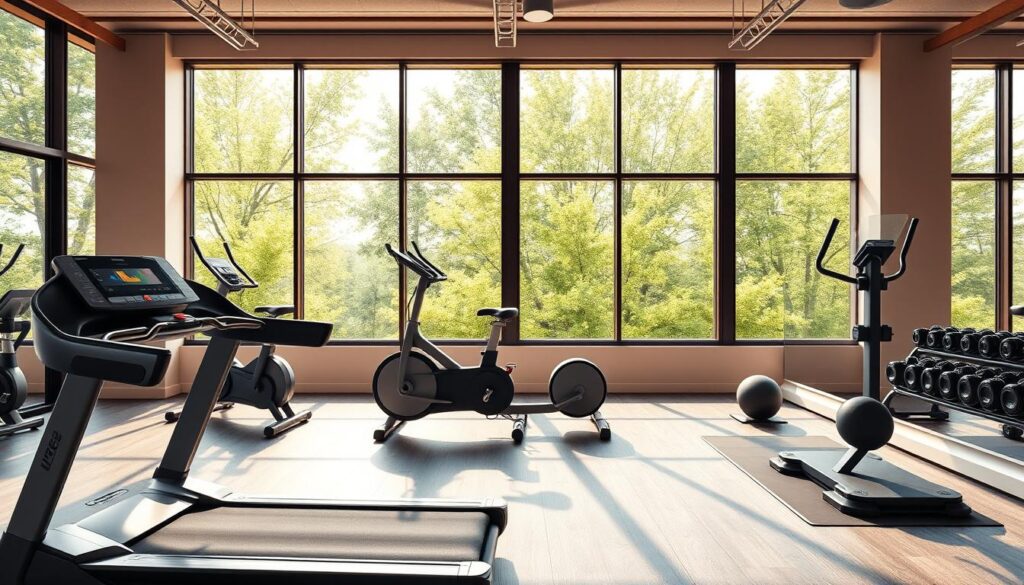
Choosing the right cardio equipment depends on your goals and what you like. Treadmills, ellipticals, and bikes are popular for home and gym workouts.
Think about the impact on your joints, how easy it is to adjust the intensity, and if you enjoy it. For example, swimming or using an elliptical might be better for those with joint problems.
Leveraging Non-Exercise Activity Thermogenesis (NEAT)
Non-exercise activity thermogenesis (NEAT) is a great way to burn more calories every day. It includes activities like walking to work, doing chores, or even fidgeting. By adding more movement to your day, you can burn more calories.
Small Lifestyle Changes That Add Up
Small changes can make a big difference. Standing instead of sitting can burn up to 100 calories a day. Standing uses more muscles and burns more energy than sitting.
Other simple changes include taking the stairs, walking to a coworker’s desk, or jumping jacks during TV breaks. These small actions can add up to a lot of calories burned.
These changes might seem small, but they can really add up. They can help counteract the effects of a sedentary job or lifestyle.
The Impact of Standing Desks and Daily Movement
Standing desks are a great way to increase NEAT. They let you switch between sitting and standing, which can burn more calories and improve your posture. Studies show standing desks can burn up to 50 calories per hour more than sitting.
Adding more movement to your day is also key. Try taking short walks, biking or walking to work, or doing chores more energetically. The goal is to move more and sit less.
| Activity | Calories Burned per Hour |
|---|---|
| Sitting | 80-100 |
| Standing | 130-150 |
| Walking (3 mph) | 180-220 |
| Household Chores | 200-400 |
Understanding and using NEAT can lead to big changes in your daily habits. It’s about finding ways to move more throughout the day.
Optimizing Nutrition to Support Calorie Burning
To burn more calories, knowing how nutrients affect your metabolism is key. The right foods can boost your body’s calorie-burning power. This helps you reach your fitness goals.
How your body breaks down food affects your metabolic rate. Foods need different amounts of energy to digest and process. This is called the thermic effect of food (TEF).
The Thermic Effect of Food Explained
The thermic effect of food is the energy your body uses to process nutrients. Protein-rich foods have a higher thermic effect than fats and carbs. This means more calories are burned when you digest them.
Some foods can increase your metabolism because of their high thermic effect. For instance:
- Protein-rich foods like lean meats, fish, and eggs
- High-fiber foods such as fruits, vegetables, and whole grains
- Spicy foods that contain capsaicin, like chili peppers

Protein Intake and Metabolic Efficiency
Protein is vital for a good metabolism. Eating enough protein helps build and repair muscles. It also increases the thermic effect of food, helping you burn more calories.
To get the most from protein for your metabolism, follow these tips:
- Distribute protein intake evenly throughout the day
- Choose high-quality protein sources, such as lean meats, dairy, and plant-based options
- Aim for a balanced diet that includes a variety of protein-rich foods
By understanding and using the thermic effect of food and optimizing protein intake, you can help your body burn calories naturally. This makes it easier to reach your fitness goals.
The Role of Hydration in Metabolic Health
Hydration is key for metabolic health. It helps with many bodily functions that affect our metabolic rate and health. Even a little dehydration can slow down our metabolism, making it harder to lose weight.
Hydration and Metabolic Processes
Water is vital for many metabolic processes. It helps with chemical reactions, moves nutrients and oxygen to cells, and removes waste. When we’re well-hydrated, these processes work better, keeping our metabolism healthy.
How Water Consumption Affects Fat Oxidation
Drinking water can help with fat burning. Research shows that even a bit of dehydration can make it harder to burn fat. Drinking enough water can help burn fat, aiding in weight loss and better metabolic health.
Here are some key points on how water consumption affects fat oxidation:
- More water can boost metabolism and help burn fat.
- Even a little dehydration can slow down metabolic processes, including fat burning.
- Drinking water before meals can help with weight loss by making you feel fuller and boosting metabolism.
Replacing Caloric Beverages with Water
Switching to water can cut down on calories. Drinks with sugar and calories can add a lot to our daily intake, leading to weight gain and metabolic problems. Drinking water instead helps avoid these extra calories and keeps us hydrated.
Benefits of Replacing Caloric Beverages with Water:
- Reduces overall calorie intake.
- Helps in managing weight more effectively.
- Supports metabolic health by avoiding high sugar and calorie content.
In conclusion, staying hydrated is essential for metabolic health. By understanding water’s role in our body and making simple changes like drinking water instead of sugary drinks, we can help with weight loss and improve our metabolic health.
Sleep Quality and Its Connection to Weight Loss
The link between sleep quality and weight loss is deeper than many think. Poor sleep can mess with our body’s processes, making it tough to shed pounds.
Not getting enough quality sleep changes our body in ways that affect our weight. Sleep impacts weight loss mainly through hormonal regulation. Hormones control hunger and fullness, and sleep loss can upset this balance.
Hormonal Regulation and Appetite Control
Sleep influences the balance of hormones that control hunger. For example, leptin and ghrelin are key. Leptin helps us feel full, while ghrelin makes us hungry. Without enough sleep, leptin drops, and ghrelin rises, leading to more hunger and eating.
“Sleep deprivation can lead to changes in the levels of hormones that regulate appetite, making it more challenging to stick to a healthy diet.”
A study in the Journal of Clinical Endocrinology and Metabolism showed sleep-deprived people eat more calories. They tend to choose high-fat and high-carb foods.
Strategies for Better Sleep Hygiene
Improving sleep hygiene is key for better sleep. Here are ways to get better sleep:
- Stick to a regular sleep schedule
- Have a calming bedtime routine
- Stay away from caffeine and screens before bed
- Make sure your sleep area is dark, quiet, and cool
- Don’t eat big meals close to bedtime
By using these tips, you can improve your sleep quality. This helps with weight loss.

In summary, sleep quality is vital for weight loss. Knowing how sleep affects hormones and hunger helps. Better sleep habits can boost your weight loss journey.
The Impact of Stress Management on Body Composition
Chronic stress can greatly affect how our bodies store fat. This makes managing stress key for reaching fitness goals. When we’re stressed, our bodies release hormones like cortisol.
Cortisol is a major stress hormone. It plays a big role in how our bodies handle stress. Knowing how cortisol affects fat storage is important for managing stress well.
Cortisol and Its Effect on Fat Storage
Cortisol is called the “stress hormone” because it’s released when we’re stressed. It helps our bodies break down fat, protein, and carbs. But, too much cortisol can make us store more fat around our belly.
Here are some key effects of cortisol on fat storage:
- Increased appetite and cravings for comfort foods
- Enhanced storage of fat, mainly in the belly area
- Slowed metabolism due to the body’s “fight or flight” response
Keeping cortisol levels in check is key for a healthy body shape. This can be done through lifestyle changes and stress management.
Mindfulness Practices to Support Fitness Goals
Mindfulness practices like meditation and yoga help manage stress. They lower cortisol levels and boost mental health, helping with fitness goals.
Some effective mindfulness practices include:
- Meditation: Regular meditation can lower stress and cortisol levels.
- Yoga: Yoga combines physical movement with deep breathing, making it great for stress management.
- Deep Breathing Exercises: Simple yet effective, deep breathing can calm the mind and reduce cortisol.
Adding these practices to your daily routine can positively affect your body composition. It helps reduce cortisol’s negative effects.
By understanding stress’s impact on body composition and using mindfulness, you can manage cortisol levels. This supports your fitness goals.
Advanced Techniques for Boosting Caloric Burn
There are advanced methods like cold exposure and intermittent fasting that can boost caloric burn. These techniques help those looking to improve their fitness and burn more calories.
Cold Exposure and Brown Fat Activation
Cold exposure is a method that activates brown fat, a type of fat that burns calories. When exposed to cold, the body works harder to stay warm, burning more energy. This is because of brown adipose tissue (BAT), which is different from white fat that stores energy.
Studies show that cold exposure increases BAT activity. This leads to better metabolic health and more calorie burn. To try cold exposure, take cold showers, go outside in cold weather, or use cryotherapy chambers.
“Exposure to cold temperatures can increase the activity of brown fat, leading to enhanced caloric expenditure and improved metabolic health.”
The Benefits of Intermittent Fasting
Intermittent fasting is another way to increase caloric burn. It involves eating only during certain times, leading to more fat burning and better metabolic flexibility. There are different types of intermittent fasting, like 16:8 and 5:2, to fit your lifestyle.
One big plus of intermittent fasting is it helps the body burn fat more efficiently. By fasting, the body learns to use stored fat for energy. This can lead to more calorie burn and better body shape.
- Improved insulin sensitivity
- Enhanced autophagy
- Increased human growth hormone (HGH) production
Before starting intermittent fasting or cold exposure, talk to a healthcare professional. It’s important to get advice on making such big changes to your routine.
Common Myths About Burning Calories
It’s important to know the truth about burning calories. Many people start their fitness journey with wrong ideas. These ideas can slow them down or even hurt them. We will clear up some common myths about burning calories.
Debunking Spot Reduction
The idea of spot reduction is a big myth in fitness. It says you can lose fat in one area by working it. But, studies show fat loss happens all over, not just in the muscles you’re working.
For example, doing lots of crunches will make your abs stronger. But, it won’t melt the fat around your belly. A better way is to lose fat all over with diet and exercise. Then, use strength training to build muscle.
Why Over-Exercising Can Be Counterproductive
Many think more exercise is always good. But, over-exercising can actually harm you. It can lead to injuries, burnout, and even slow down your metabolism.
Too much exercise can make your body produce more cortisol. This hormone helps store fat around your belly. It can also mess with your hormones and make you less motivated to keep exercising.
A better plan is to mix cardio, strength training, and rest days. This approach is more effective and easier to stick with over time.
Tracking Your Progress Effectively
Tracking your progress is key to reaching your fitness goals. The right tools and metrics help you understand how you’re doing. This way, you can adjust your plan as needed.
Using Wearable Heart Rate Monitors and Wearable Technology
Wearable tech, like heart rate monitors, has changed how we track fitness. These devices give real-time data on heart rate, calories, and exercise intensity. They help you:
- Monitor your heart rate in real-time during workouts to optimize intensity.
- Track calories burned during exercise to gauge energy expenditure.
- Analyze sleep patterns to understand rest and recovery.
These features give a deeper look at your physical activity and health impact.
Focusing on Body Composition Over Scale Weight
Scale weight is common for tracking, but it’s not perfect. Body composition gives a better view of fitness. It looks at lean body mass to body fat ratio, showing how well your fitness plan works.
By focusing on body composition, you can:
- Assess changes in muscle mass and body fat percentage.
- Understand the impact of your diet and exercise on your body.
- Set realistic goals based on tangible metrics, not just scale weight.
This method leads to a more balanced and healthy fitness plan.
Conclusion
To reach your fitness goals, you need a full plan. This includes working out, eating right, and changing your lifestyle. Adding High-Intensity Interval Training, strength training, and cardio can really help you burn more calories.
Also, making small changes in your daily life can help a lot. For example, moving more, eating better, drinking water, sleeping well, and handling stress can aid in weight control.
By using these methods and keeping an eye on your progress, you can live a healthy and active life. This will help you reach your fitness goals.
