

Looking ahead, the 2026 economic forecast is promising. Despite recent changes in policies and fast tech advancements, the world’s markets are showing strength.
Goldman Sachs Research predicts a 2.9% global economic growth. This growth comes from lower interest rates and smarter spending. In the US, a 2.8% growth is expected, thanks to business investments and tax breaks.
It’s important to understand these trends if you want to improve the economy. By using these shifts, you can achieve more financial success.
Key Takeaways
- Global GDP is projected to rise by 2.9% next year.
- US expansion is driven by tax cuts and increased business investment.
- Lower policy rates are helping stabilize international markets.
- Reduced tariff impacts are creating a more favorable trade environment.
- Strategic planning remains essential for navigating current financial landscapes.
The Current Economic Landscape of the United States
The US economy is strong, thanks to consumer spending and real wage growth. It has a solid labor market, but it’s slowing down. Consumer spending is up because of higher wages and a strong stock market.
Last year, the economy grew well, thanks to people spending more. The stock market also helped. But, the economy faces challenges like policy uncertainty and the risk of an AI bubble.
The labor market is strong, but it’s slowing down. This slowdown will affect the Federal Reserve’s interest rate decisions next year. The Fed will balance keeping the economy growing and controlling inflation.
| Economic Indicator | Current Status | Trend |
| Consumer Spending | Robust | Positive |
| Real Wage Growth | Increasing | Stable |
| Stock Market | Buoyant | Positive |
| Labor Market | Slowing | Negative |
It’s important to understand these trends to boost the economy in 2026. By focusing on the economy’s strengths and addressing its weaknesses, policymakers can create strategies for growth and stability.
The Best Ways to Boost the Economy in 2026
To boost the economy in 2026, we need to focus on fiscal responsibility and consumer spending. Goldman Sachs Research says real GDP will grow 2.8% in 2026. This growth comes from tax cuts, wage increases, and more wealth.
It’s key to have a balanced plan for the economy. Keeping a tight budget is important for the future. But, we also need to boost consumer spending to get things moving now.
Prioritizing Fiscal Responsibility and Growth
To be fiscally responsible, we must make smart budget choices and cut waste. Here’s how:
- Make government programs more efficient
- Change taxes to help the economy grow
- Use public-private partnerships to bring in more investment
Economic experts say a balanced budget is vital for growth. It’s not just right; it’s necessary.
“Fiscal discipline is essential for creating a stable economic environment that attracts investment and fosters growth.”
| Economic Indicator | 2025 Forecast | 2026 Forecast |
| Real GDP Growth | 2.5% | 2.8% |
| Unemployment Rate | 4.2% | 4.0% |
| Inflation Rate | 2.1% | 2.3% |
Encouraging Consumer Confidence and Spending
Boosting consumer confidence is also key. It affects how much people spend. To do this, we can:
- Support jobs and higher wages
- Strengthen consumer protection laws
- Teach people about money to help them make better choices
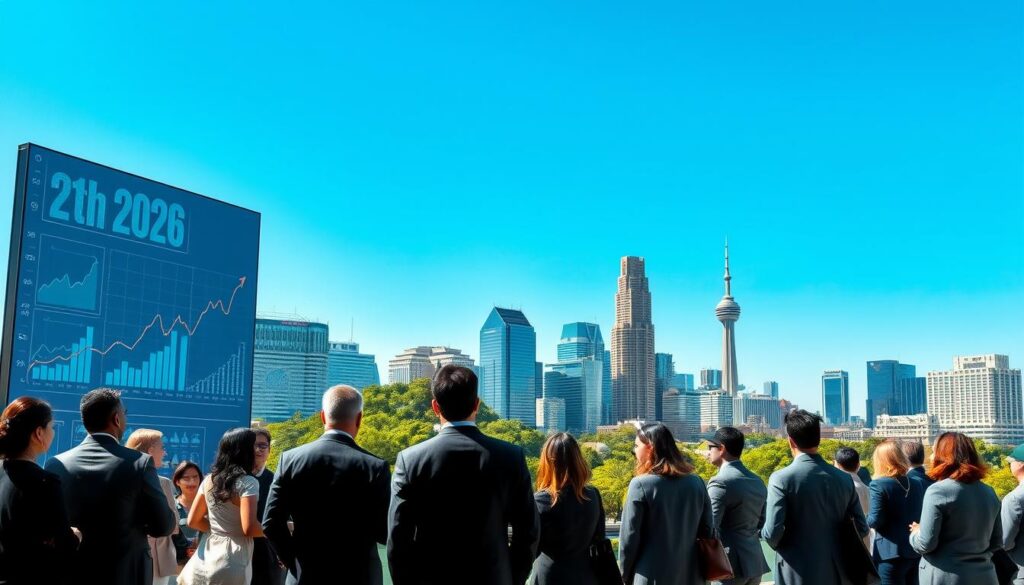
By working on both fiscal responsibility and boosting consumer confidence, we can grow the economy in a healthy way. Real wage increases and more wealth will help keep spending strong in 2026.
Investing in Sustainable Infrastructure Projects
Investing in sustainable infrastructure is key for long-term economic growth. It improves life quality and supports businesses. This approach also boosts economic productivity.
Sustainable infrastructure includes projects like transportation and digital connectivity. These projects reduce environmental harm while boosting the economy.
Modernizing Transportation Networks
Updating transportation systems is essential for sustainable infrastructure. It means better roads, bridges, and public transport. This improves efficiency, cuts down on traffic, and lowers emissions.
Investing in modern transport makes cities more appealing to businesses and people. It can stimulate local economies. For example, good public transport cuts down on travel time, boosts productivity, and cleans the air.
- Good roads save time and money on car upkeep.
- More public transport helps low-income folks get around.
- Less traffic means cleaner air and a better life.
Upgrading Digital Connectivity Across Rural Areas
Improving digital access in rural areas is also vital. It means bringing broadband to support businesses, residents, and public services.
With better digital connections, rural areas can draw in new businesses. They can support remote work and improve access to healthcare and education. This helps balance economic growth between cities and countryside.
Key benefits of better digital access include:
- More online learning and education.
- Healthcare gets better with telemedicine.
- Businesses get a boost from e-commerce and digital marketing.
Advancing Small Business Growth and Entrepreneurship
Small businesses and entrepreneurship are key to the US economy. They drive growth, innovation, and create jobs. Their success is essential for a strong economy.
To help small businesses, we need to tackle their challenges. We should focus on reducing regulatory barriers and improving access to capital.
Reducing Regulatory Barriers for Startups
Startups face a complex regulatory landscape. Simplifying regulations can make it easier for them to start and grow.
- Simplifying licensing and permit processes
- Reducing compliance costs for small businesses
- Implementing regulatory sandboxes for innovation
These steps can help startups overcome regulatory hurdles. This way, they can focus on innovation and growth.
Improving Access to Venture Capital and Loans
Getting capital is key for small business success. We need to make it easier for them to get venture capital and loans.
| Initiative | Description | Benefit |
|---|---|---|
| Venture Capital Funds | Investing in startups with high growth | Provides funding for growth |
| Small Business Loans | Offering loans with favorable terms | Eases capital access for small businesses |
| Business Incubators | Providing resources and support for startups | Fosters innovation and growth |

By supporting small business growth, the US can build a stronger economy. We need to reduce barriers and improve capital access. We also need to encourage innovation and risk-taking.
Key Takeaways:
- Reducing regulatory barriers helps startups enter the market.
- Improving access to capital is vital for business growth.
- A supportive environment for small businesses drives prosperity.
Modernizing the American Workforce Through Education
Technology is advancing fast, making a skilled and flexible workforce more important than ever. The job market is stable, with wages growing faster than prices. Yet, worries about AI’s effect on jobs and the need for new skills persist.
To tackle these worries, we must focus on workforce development through education. Investing in vocational and technical training can help fill the skills gap. This prepares workers for jobs that are in high demand.
Expanding Vocational and Technical Training
It’s key to grow vocational training programs to meet new industry needs. This can be done by:
- Creating new training for technologies like AI, green energy, and cybersecurity.
- Updating current programs to include practical experience and apprenticeships.
- Making vocational training more accessible to groups often left behind, like minorities and those with lower incomes.
By doing these things, we can keep the American workforce strong and ready for the future.
Bridging the Skills Gap in Emerging Industries
To close the skills gap in new fields, we need a broad strategy. This includes:
- Figuring out the skills needed for new industries and creating specific training.
- Working with industry leaders to make sure training meets job market needs.
- Offering help and resources for workers to learn new skills and adjust to changing job needs.
By teaming up to tackle the skills gap, we can build a workforce that’s both strong and adaptable.
The future of the American workforce depends on our ability to adapt and evolve in response to changing economic conditions. By putting a focus on workforce development and education, we can create a better, more lasting economy for future generations.
Leveraging Technological Innovation and Artificial Intelligence
Looking ahead to 2026, using new tech and AI will be key to boosting the US economy. AI can greatly improve productivity, adding $8 trillion in value for US companies. This is a big deal for the economy.
Businesses can get more efficient and cut costs by using AI and new tech. This makes them stronger in the global market. It also helps the economy grow and creates new jobs.
Boosting Productivity Through Automation
AI and machine learning are changing how we work. They make processes smoother, more accurate, and cut down on manual work. This means businesses can use their resources better, leading to more productivity and growth.
Automation brings many benefits:
- It makes things more efficient and productive.
- It improves accuracy and lowers mistakes.
- It saves money by reducing labor costs.
- It helps businesses compete better worldwide.
By using automation, US companies can take advantage of AI’s power. This leads to big economic wins.

Supporting Research and Development Initiatives
To really make the most of new tech and AI, we need to back research and development (R&D). Investing in R&D brings new tech to life and helps old tech fit into new areas.
| R&D Focus Area | Potential Impact | Example Applications |
|---|---|---|
| Artificial Intelligence | Enhanced decision-making, automation | Predictive maintenance, customer service chatbots |
| Internet of Things (IoT) | Increased efficiency, new business models | Smart manufacturing, connected logistics |
| Blockchain | Improved security, transparency | Secure supply chain management, digital identity verification |
By focusing on R&D in areas like AI, IoT, and blockchain, the US can stay ahead. This drives economic growth through new tech.
Strengthening Domestic Manufacturing and Supply Chains
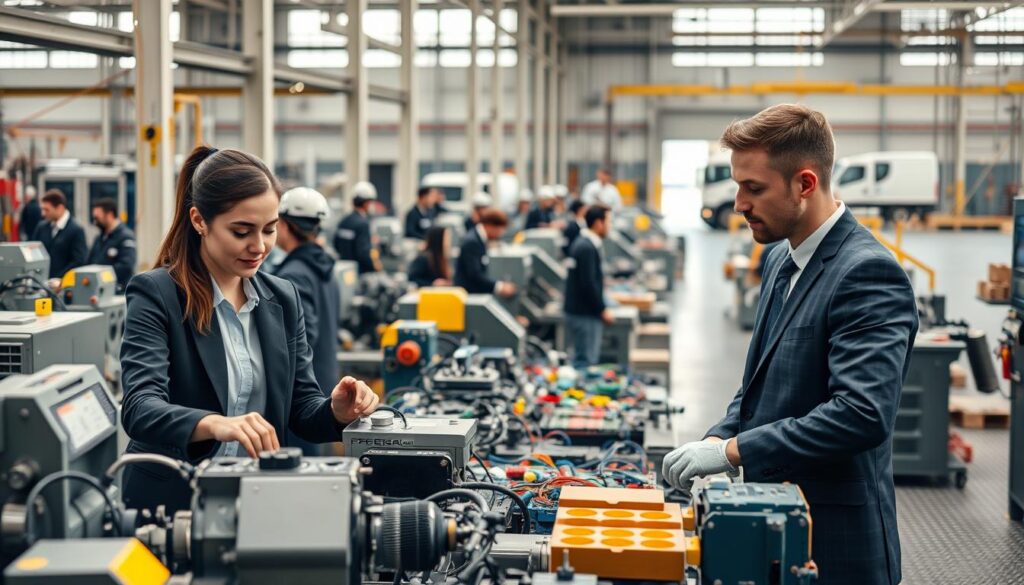
Boosting the US economy starts with a strong domestic manufacturing and supply chain. A solid manufacturing sector boosts GDP and is key for national security and stability.
The current tariff policies have mixed effects on US manufacturing. Some sectors gain from protection, but others see higher costs from tariffs on imports. Yet, with the right strategies and investments, we can grow domestic manufacturing.
Reshoring Critical Production Facilities
Bringing back critical production to the US is vital. It helps reduce dependence on global supply chains for essential items like medical gear and defense parts. This move can lower risks from global disruptions.
Benefits of Reshoring include better quality, faster delivery, and more jobs in manufacturing. It also boosts national security by ensuring a steady supply of vital goods.
- Reduced reliance on international supply chains
- Improved quality control and reduced lead times
- Creation of high-paying manufacturing jobs
- Enhanced national security
Enhancing Logistics and Distribution Efficiency
Improving logistics and distribution is also key. This means investing in modern warehouses and transport systems.
Technological innovations like AI and blockchain can make supply chains more visible and efficient. These tools help manage stock, predict needs, and handle disruptions better.
Streamlining rules and cutting red tape also helps goods move smoothly in the US. This can be done by supporting integrated logistics and digital technologies.
Promoting Green Energy and Environmental Sustainability
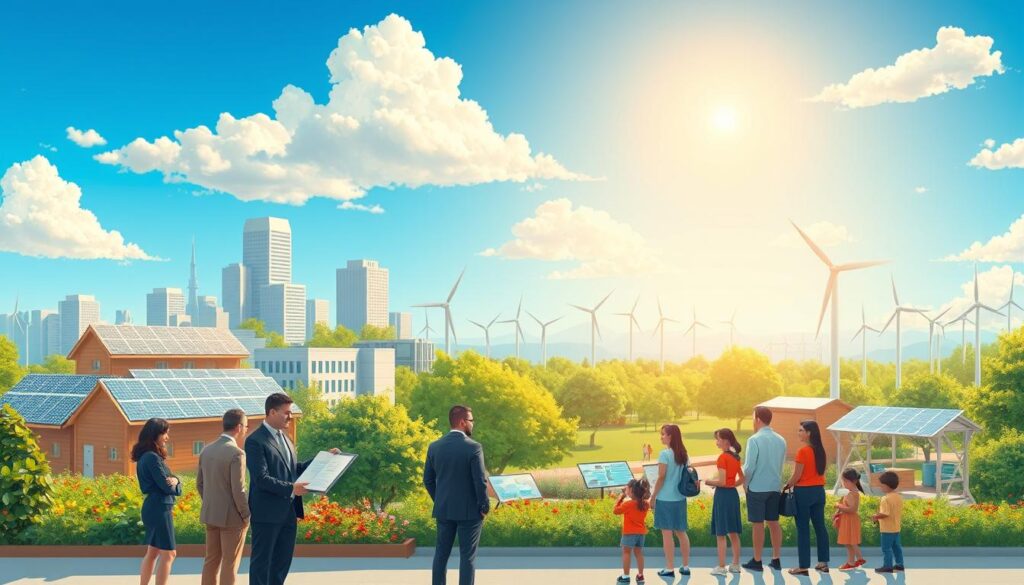
Green energy is key to fighting climate change and building a sustainable future. It shows how renewable energy can grow the economy while protecting the environment. This is a big step towards a better world.
Switching to green energy is good for the planet and the economy. By incentivizing renewable energy adoption, we can spark innovation and create jobs. It also helps us use less fossil fuels.
Incentivizing Renewable Energy Adoption
To boost green energy, we need incentives. Governments and companies can offer tax breaks, grants, and subsidies for using solar and wind power. This helps businesses and people invest in clean energy.
Renewable energy incentives make it easier for new companies to start in clean tech. They also encourage more research and development in green technologies. This leads to better and more efficient clean energy solutions.
Creating Jobs in the Clean Tech Sector
The clean tech sector is creating lots of jobs. As we need more renewable energy, we need more skilled workers. This includes jobs in making, installing, and fixing these technologies.
By creating jobs in the clean tech sector, we can fight unemployment. We also train workers for the future economy. This move helps us move away from old fossil fuel-based industries.
Also, the clean tech sector boosts local economies. It makes them stronger and more stable. This is good for everyone.
Enhancing Financial Literacy for Household Stability
Financial literacy is key to a stable home. It helps people make smart money choices. With rising costs in housing, healthcare, and utilities, learning about money is more important than ever.
Knowing how to handle money is vital in today’s world. Financial literacy teaches the value of budgeting, saving, and investing. This knowledge boosts financial health.
Promoting Personal Savings and Debt Management
Learning to save and manage debt is a big part of financial literacy. The 50/30/20 rule is a good start. It suggests spending 50% on needs, 30% on wants, and 20% on savings and debt.
Managing debt well means knowing the difference between good and bad debt. It’s about paying off high-interest loans on time. Financial counseling can help with these strategies.
| Strategy | Description | Benefit |
|---|---|---|
| 50/30/20 Rule | Allocate 50% to necessities, 30% to discretionary spending, and 20% to savings and debt repayment. | Balanced financial management |
| Debt Consolidation | Combine multiple debts into a single loan with a lower interest rate. | Simplified payments and reduced interest |
| Financial Counseling | Seek professional advice on managing finances and debt. | Personalized financial planning |
Expanding Access to Financial Planning Resources
More people need to know about financial planning. This can be done through online tools, community workshops, and help from banks. These resources teach about saving, investing, and planning for retirement.
Financial planning resources help set and reach financial goals. They make households more stable and resilient.
Improving financial literacy is complex. It involves education, access to resources, and good money habits. By focusing on these, homes can become more stable. This helps the whole economy too.
Optimizing Tax Policies for Economic Stimulation
Looking ahead to 2026, changing tax policies is key to boosting the economy. The Tax Cuts and Jobs Act shows how good tax policies can really help. The One Big Beautiful Bill Act aims to help the economy grow by cutting business and personal taxes.
The economy faces both hurdles and chances. Making tax codes simpler and focusing on incentives can spark growth. It’s not just about lowering taxes but also making them easier for everyone to understand.
Simplifying Tax Codes for Small Businesses
Small businesses are vital to the U.S. economy. Making tax codes simpler for them can greatly help. Complex taxes can stop people from starting businesses and take away resources from growth.
- Reducing tax brackets makes planning easier.
- Streamlining deductions and credits cuts down on costs.
- A simpler filing process saves time and money.
Targeting Incentives for Middle-Class Families
Middle-class families drive the economy through their spending. Tax policies that help them can boost economic activity.
- Increasing the standard deduction helps middle-class families.
- Expanding the Earned Income Tax Credit (EITC) aids low-to-middle-income families.
- Adjusting tax brackets for inflation stops taxes from going up too fast.
By using these strategies, we can make tax policies better for everyone. As we enter 2026, these steps are vital for a strong and fair economic recovery.
Expanding Access to Affordable Healthcare Services
Affordable healthcare is key for the U.S. economy. High healthcare costs hurt many Americans. About 20 million people saw their insurance costs almost double.
This issue affects families and the economy. To fix it, we need policies that make healthcare cheaper and better.
Reducing Healthcare Costs for Employers
Lower healthcare costs help employers too. When healthcare is cheaper, employers save on health insurance. This lets them invest in other business areas.
This can make businesses more productive and competitive.
Strategies to reduce healthcare costs for employers include:
- Promoting preventive care to reduce the need for costly medical interventions
- Encouraging the use of generic drugs and other cost-effective treatments
- Implementing wellness programs to improve employee health
Improving Preventative Care to Boost Productivity
Boosting preventative care is also vital. Preventative care includes regular check-ups and vaccinations. It helps avoid serious health issues.
Key strategies for improving preventative care include:
- Expanding health education to inform people about the importance of preventative care
- Increasing access to screenings and vaccinations, particular in underserved communities
- Encouraging employers to offer wellness programs and incentives for healthy behaviors
By cutting healthcare costs and improving care, the U.S. can make healthcare more affordable. This helps families and boosts the economy.
Fostering International Trade and Strategic Partnerships
In today’s world, international trade and strategic partnerships are vital for economic growth. The US economy will likely see benefits from lower global tariffs and more trade with other nations.
The role of international trade is huge. It lets businesses reach more customers and make more money. By opening up new markets for American exports, the US can grow its economy even more.
Opening New Markets for American Exports
To do this, the US needs to work on good trade deals and lower trade barriers. This requires diplomacy and working together with other countries.
Finding new markets is key. The US should look at countries with growing demand for American products. This way, US businesses can find new chances and increase exports.
Strengthening Global Supply Chain Resilience
Expanding trade is also about making supply chains stronger. This can be done by spreading out supply chains and improving logistics.
Stronger supply chains help US businesses not rely too much on one place or supplier. This reduces risks in international trade.
In the end, promoting international trade and strategic partnerships is essential for the US’s economic success.
Conclusion
The US economy looks bright for 2026, thanks to smart investments and new tech. To keep growing, we need to be fiscally wise, boost consumer confidence, and focus on green energy. This will help our planet and our economy.
Investing in green infrastructure and helping small businesses grow is key. The 2026 forecast shows we can innovate and grow together. With teamwork, we can build a better future for everyone.
We must work together to support economic growth. This means everyone – policymakers, businesses, and people – need to join hands. As we move forward, staying flexible and committed to growth is vital.
