

Turning your home into a dream space doesn’t need a big wallet or pros. Simple DIY home improvement projects help you learn new skills. They also let you add your own style to your home.
Doing small creative tasks boosts your confidence. Painting a wall or putting in new hardware are great examples. These DIY projects make your home feel special and unique.
A good home renovation starts with easy goals. By making functional changes, you can make your home more comfortable. You won’t feel stressed by big construction projects.
Key Takeaways
- Start with small tasks to build your confidence and technical skills.
- Focus on functional upgrades that add immediate value to your living space.
- Proper planning prevents common mistakes during your renovation journey.
- Simple updates can significantly change the aesthetic of any room.
- Enjoy the process of creating a personalized environment at your own pace.
Getting Started with DIY Home Improvement
Before starting DIY projects, it’s important to prepare well. You need to know what your home needs, be realistic about what you can do, and find inspiration for your projects.
Assessing Your Home Needs
Start by checking what your home needs. Walk through your home and make a list of things that need fixing or updating. Think about how things work, look, and if they’re safe. You might see old fixtures, worn-out floors, or bad storage.
Key areas to assess include:
- Kitchen and bathroom functionality
- Condition of flooring and walls
- Storage and organization
- Outdoor spaces and curb appeal
Setting Realistic Expectations
It’s key to set realistic goals to avoid getting stuck. Know your skills, how long projects take, and what they cost. Be true to yourself about what you can do with what you have.
| Project | Skill Level | Time Required |
|---|---|---|
| Painting a room | Beginner | 1-3 days |
| Installing new flooring | Intermediate | 3-7 days |
| Building a deck | Advanced | 1-3 weeks |
Gathering Inspiration and Planning
Finding inspiration is a fun part of DIY. Look for ideas online, in magazines, or by visiting showrooms. Once you know what you want, make a detailed plan. Include timelines, budgets, and what materials you’ll need.
Tips for gathering inspiration:
- Follow home improvement blogs and social media accounts
- Visit local hardware stores for ideas and advice
- Create a Pinterest board to collect your favorite ideas
Essential Toolkits for Beginners
Starting a DIY home improvement project needs the right tools. Beginners should focus on the basics. A good toolkit makes work easier, safer, and more efficient.
Must-Have Hand Tools
Hand tools are key for any DIY project. They are versatile and easy to use. You’ll need a tape measure, level, hammer, utility knife, and pliers. These tools help with measuring, driving nails, and making cuts.
A tape measure is vital for measuring spaces and materials. A level ensures your work is straight. A hammer is used for many tasks, like driving nails and breaking things.
Power Tools for Light Projects
Power tools can make DIY projects easier, but beginners don’t need heavy-duty ones. Focus on versatile tools for light tasks.
A cordless drill is essential. It’s great for drilling and driving screws. Other useful tools include a circular saw for straight cuts and a sander for smoothing surfaces.
| Tool | Description | Common Use |
|---|---|---|
| Cordless Drill | Drills holes and drives screws without being plugged into a power source. | Assembling furniture, hanging pictures. |
| Circular Saw | Makes straight cuts in lumber. | Cutting wood for shelves or framing. |
| Sander | Smooths out surfaces. | Preparing surfaces for painting or staining. |
Safety Gear and Protective Equipment
Always prioritize safety in DIY projects. Safety gear and protective equipment prevent injuries. You’ll need safety glasses, ear protection, and a dust mask.
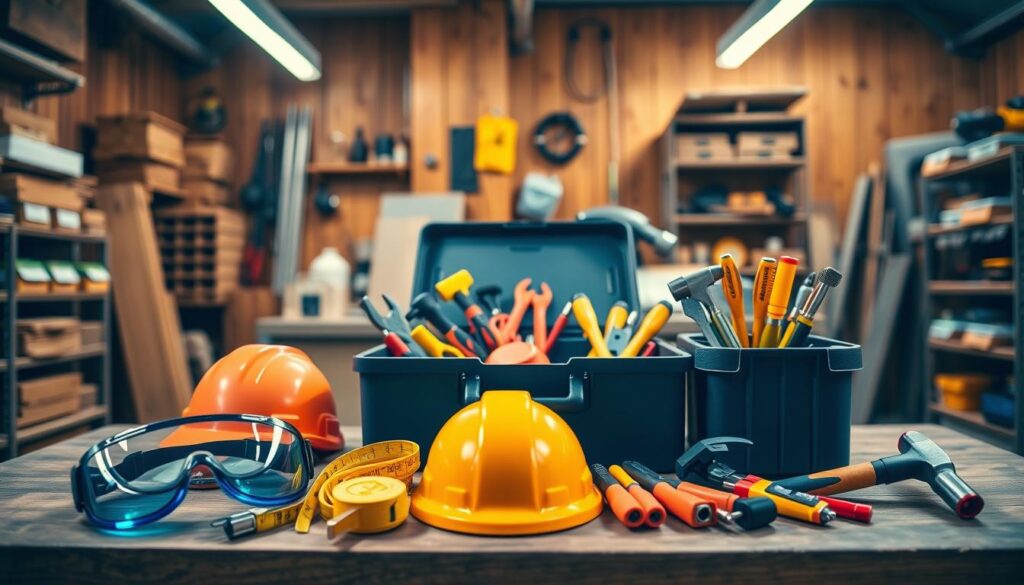
Safety glasses protect your eyes, ear protection keeps your hearing safe, and a dust mask stops harmful particles. Good quality safety gear is an investment in your health.
Refreshing Your Walls with Paint and Texture
Give your living space a new look with paint and texture. Painting is easy and affordable. With the right techniques, you can get a professional finish.
The paint finish you choose greatly affects your walls’ look and feel. The right finish can make your home look better and even make rooms seem bigger.
Choosing the Right Paint Finish
Choosing the right paint finish is key for the look you want. Different finishes offer unique benefits for different areas of your home.
- Flat (Matte) Finish: Great for low-traffic areas and ceilings, as it hides imperfections well.
- Eggshell Finish: Offers a slight sheen and is more durable than flat finish, making it suitable for living rooms and bedrooms.
- Satin Finish: Provides a soft glow and is easy to clean, making it perfect for kitchens and bathrooms.
- Gloss Finish: Highly durable and reflective, often used for trim and doors.
| Paint Finish | Description | Ideal Use |
|---|---|---|
| Flat (Matte) | No sheen, hides imperfections | Low-traffic areas, ceilings |
| Eggshell | Slight sheen, durable | Living rooms, bedrooms |
| Satin | Soft glow, easy to clean | Kitchens, bathrooms |
| Gloss | Highly durable, reflective | Trim, doors |
Techniques for a Professional Look
To get a professional-looking paint job, use the right techniques. Here are some tips to help you:
Preparation is key: Make sure your walls are clean, dry, and sanded before painting.
Use quality tools: Invest in good-quality brushes and rollers for a smooth finish.
Apply primer if necessary: Primer can help cover dark colors and create a uniform base.
Adding Texture with Beadboard or Wainscoting
Adding texture to your walls can add depth and interest. Beadboard and wainscoting are great for adding texture and style.
Beadboard has vertical grooves, while wainscoting covers the lower wall part. Both can be painted to match your decor.
- Beadboard: Adds a classic, rustic touch and can be used on entire walls or as an accent.
- Wainscoting: Provides a sophisticated look and can help protect walls from damage.
Upgrading Cabinetry and Hardware
DIY home improvement projects can make a big difference. Upgrading your cabinetry and hardware is a great way to transform a room. Simple changes like new cabinet hardware and painted cabinets can make a huge impact. Adding soft-close hinges also boosts your cabinet’s functionality.
Replacing Drawer Pulls and Knobs
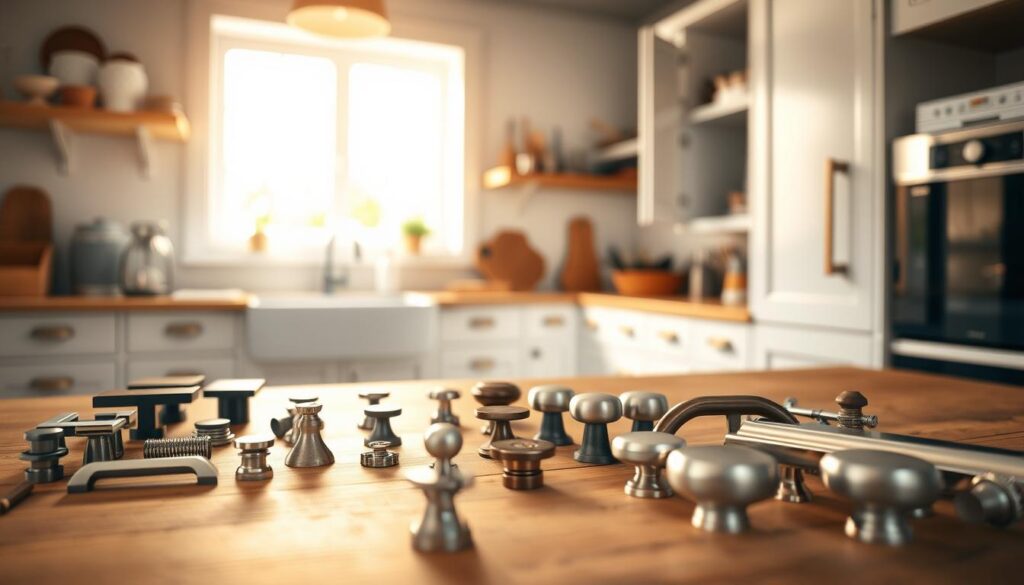
Swapping out drawer pulls and knobs is easy with basic tools. First, pick new hardware that fits your style and finish.
Think about the size of your cabinets and drawers when picking pulls and knobs. Measure the screw spacing of your old hardware for a smooth swap.
Painting Kitchen Cabinets
Painting your kitchen cabinets is a budget-friendly way to refresh your kitchen. Start by preparing your cabinets well: clean them, sand, and prime if needed.
Use high-quality paint made for cabinets and follow the instructions. A satin or semi-gloss finish is best for durability.
Installing Soft-Close Hinges
Soft-close hinges make your cabinets work better. They close slowly and quietly, saving wear and tear.
To put in soft-close hinges, take out the old ones and might need to drill new holes. Follow the manufacturer’s instructions for your specific hinges.
Enhancing Lighting Fixtures for Ambiance
The right lighting can make your home feel cozier and more inviting. Lighting fixtures are not just for function; they also add to a room’s beauty.
To make your home welcoming, think about updating your lighting. You can do this with simple DIY projects that make a big difference.
Swapping Out Dated Light Fixtures
One easy way to update your lighting is by swapping out dated light fixtures. Old fixtures can make a room look old, while new ones bring modern style. Pick fixtures that match your home’s look and feel.
Installing Under-Cabinet LED Strips
Installing under-cabinet LED strips is a great way to improve your home’s ambiance. LED strips look modern and use less energy. They work well in kitchens, under shelves, or behind TVs for a unique light effect.
When putting in LED strips, make sure they’re secure and connected to power. This boosts the ambiance and makes the space more functional.
Adding Dimmer Switches for Control
Adding dimmer switches lets you control your home’s lighting. This way, you can change the mood in living rooms and bedrooms. Dimmer switches are easy to install with basic DIY skills.
They not only improve the ambiance but also help save energy. You only use the light you need, which is good for the planet and your wallet.
Installing Floating Shelves for Storage
Floating shelves are a great way to show off your favorite items and keep things tidy. They work well in many places, like kitchens, bathrooms, living rooms, and bedrooms. They offer a modern and sleek way to store things.
Locating Wall Studs Safely
Before you begin, find the wall studs. This is key for making sure your shelves are securely attached. Use a stud finder to find the studs behind the drywall. Mark their spots with a pencil once you’ve located them.
Tip: If finding studs is hard, try knocking on the wall gently. The studs will sound more solid than the empty spaces.
Selecting Sturdy Mounting Hardware
Choosing the right hardware is important for your shelves’ stability and longevity. Pick high-quality brackets or screws that fit your wall type (drywall, plaster, etc.). For heavy shelves, use anchor bolts or toggle bolts for extra support.
- For light loads, simple screws into studs may suffice.
- For heavier loads, use anchor bolts or toggle bolts.
- Make sure the hardware matches your shelf material.
Styling Your Shelves for Maximum Impact
After installing, it’s time to decorate your shelves. Place your most eye-catching items in the middle. Spread out the weight and beauty of your items across the shelf.
Group similar items, like books, vases, or photos, together. Adding plants can also bring a natural feel.
Remember, the key to styling your shelves is to strike a balance between form and function.
Revitalizing Flooring with Peel and Stick Tiles
Peel and stick tiles are a simple way to refresh your floors. They are great for DIY fans and anyone wanting a quick fix. This method makes tile installation easy and fast.
Preparing the Subfloor Surface
Before starting, make sure the subfloor is ready. It should be clean, dry, and free of dust or old adhesive. Any dirt or old adhesive can ruin the tiles’ adhesion.
Check the subfloor for cracks or uneven spots. Fix these before you begin. This ensures your floor is smooth for the tiles.
Measuring and Cutting Tiles Accurately
Getting the measurements right is key for a professional look. Measure the room carefully to figure out how many tiles you need. A tile calculator can help avoid waste.
For clean cuts, use a sharp knife or tile cutter. To fit tiles around edges and corners, make a template or use cardboard. This saves time and avoids mistakes.
Ensuring Proper Adhesion and Sealing
To make your tiles last longer, apply them correctly. Start in the room’s center and work outwards to avoid air bubbles. Press each tile firmly and use a roller to secure it well.
After putting them in, think about sealing the tiles. This protects them from moisture and wear. Sealing can make your floor last longer and look better.
Improving Curb Appeal with Exterior Updates
Boost your home’s look with easy DIY projects. Simple changes can greatly improve how people see your home. These updates not only make your home look better but can also raise its value.
Painting Your Front Door
A new paint job on your front door can really make your home stand out. Pick a color that goes well with your home’s look. A bold color like red or yellow can make your home feel more welcoming.
Tips for Painting:
- Clean the door well before painting.
- Use a primer if the door is glossy.
- Apply two coats for a lasting finish.
Installing Modern House Numbers
Modern house numbers are both useful and stylish. Pick numbers that are easy to see from the street and fit your home’s style.
| House Number Style | Description | Best For |
|---|---|---|
| Modern Slate | Sleek, black numbers with a contemporary look. | Modern homes |
| Classic Brass | Traditional brass numbers with a timeless appeal. | Classic or traditional homes |
| Address Plaque | A plaque that includes the house number and sometimes the street name. | Rural or large properties |
Adding Potted Plants and Lighting
Potted plants and outdoor lights can warm up your home’s look. Choose plants that are easy to care for and lights that save energy.
Tips for Potted Plants:
- Choose plants that do well in your area.
- Use planters that match your home’s look.
- Put plants in spots that get the right amount of sun.
Creating Functional Workspace Solutions
A well-designed DIY workspace can make your home office better. Focus on making it both functional and comfortable. This way, you can boost your productivity and creativity.
Building a Simple Wall-Mounted Desk
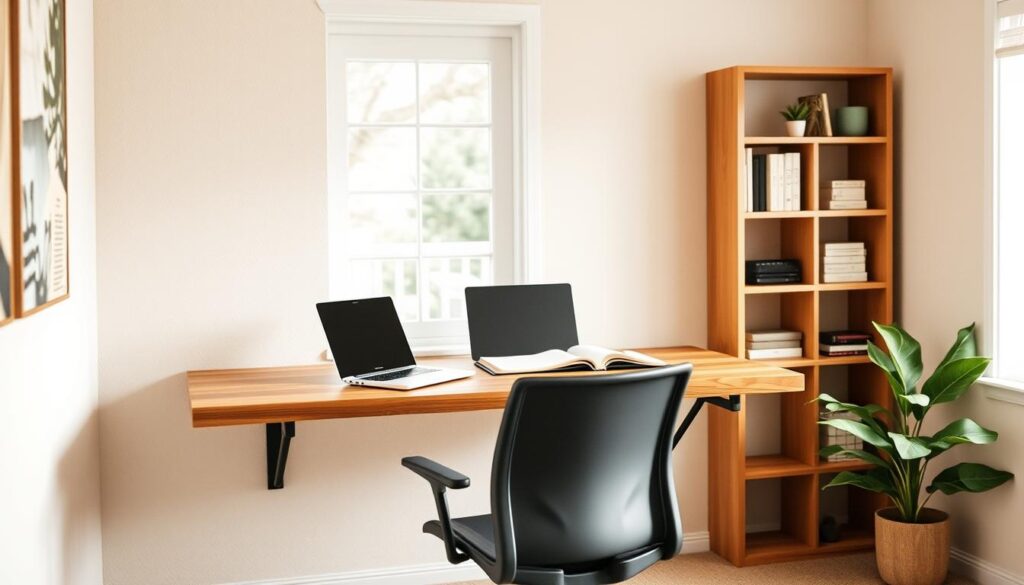
Building a simple wall-mounted desk is a great idea. It saves space and keeps your area clean. You’ll need a wooden plank, wall brackets, and screws to get started. Make sure the desk is at a height that’s good for your back and neck.
Organizing Cables and Power Strips
A messy workspace can slow you down. It’s important to keep cables and power strips organized. Use cable ties or zip ties to manage cables. A power strip with USB ports can keep your devices charged and handy.
- Use cable management boxes to hide unsightly cables
- Label your cables for easy identification
- Install a cord organizer near your workspace
Optimizing Ergonomics in Small Spaces
Good ergonomics is key for a comfortable workspace. Even in small areas, you can make it ergonomic. Position your monitor right, use an ergonomic chair, and keep things you use often within reach. Think about using a standing desk or a convertible workstation to switch between sitting and standing.
By following these tips, you can make a workspace that’s both functional and ergonomic. This will help you work better and feel better too.
Smart Home Integration for Beginners
Smart home integration is now a reality, not just a dream. It’s easy to start with beginner-friendly projects. You’ll find convenience, better security, and energy savings. You don’t need to be a tech expert to begin.
Installing Smart Thermostats
Installing a smart thermostat is a simple yet impactful project. It lets you control your home’s temperature from anywhere and saves energy. First, pick a thermostat that fits your heating and cooling system. Then, follow the manufacturer’s guide for wiring and setup, which usually involves Wi-Fi connection.
Setting Up Wi-Fi Enabled Plugs
Wi-Fi enabled plugs make your home smarter easily. They let you control devices plugged into them with a smartphone app. Just plug it into an outlet, connect to Wi-Fi via the app, and you’re set to control devices remotely.
Configuring Smart Video Doorbells
Smart video doorbells boost security and peace of mind. They let you see, hear, and talk to visitors from anywhere. Start by swapping your old doorbell with a smart one. Then, connect it to Wi-Fi and set up features like motion detection and alerts as instructed.
Smart home integration offers many benefits:
- Enhanced Convenience: Control your home’s devices from anywhere.
- Improved Security: Get alerts and watch your home live.
- Energy Efficiency: Save energy with smart thermostats and plugs.
When picking smart home devices, think about:
- Compatibility with your systems
- How easy it is to install and set up
- The control and features it offers
Safety Protocols and Best Practices
DIY home improvement needs safety protocols and best practices. It’s not just about avoiding accidents. It’s about making a safe space for creativity and work.
Before starting any DIY project, know the risks. Be aware of your surroundings, use the right tools, and follow safety rules.
Working with Electrical Components
Electrical work is risky if not done right. Always turn off the power supply before starting. Use a voltage tester to check circuits are dead. Wear insulated gloves for protection.
- Always switch off the main power supply before starting work.
- Use appropriate personal protective equipment (PPE) like gloves and safety glasses.
- Ensure you have the right tools for the job, such as a voltage tester.
Handling Heavy Materials Safely
Lifting heavy materials is common in DIY projects. To avoid injury, lift correctly using your leg muscles. If it’s too heavy, get help or use tools like dollies.
- Plan your lift: Know the weight and size of the object.
- Lift with your legs: Bend at the knees, not the waist.
- Use mechanical aids when necessary: Dollies, forklifts, or additional manpower can prevent strain.
Knowing When to Call a Professional
DIY projects can be rewarding, but sometimes it’s best to call in a professional. If unsure about a project, like electrical or plumbing, it’s safer to seek help.
Knowing your limits is key to DIY safety. Don’t risk your safety or your home’s integrity by trying something too hard.
Budgeting for Your Home Renovations
Effective budgeting is key to a successful home renovation. It keeps you on track financially and helps you meet your goals without extra costs.
To make a realistic budget, know the costs of home renovations. This includes material, labor, and funds for surprises.
Tracking Material Costs
Material costs are a big part of home renovations. To track these, make a detailed list of materials needed.
Tips for Tracking Material Costs:
- Research and compare prices from different suppliers.
- Look for sales or use coupons to save.
- Remember to include delivery or transportation costs.
As Angela Adams, a famous interior designer, said, “A good budget is not just about saving money. It’s about making smart choices that fit your goals.”
“The key to successful home renovation is not just about the money you spend, but how wisely you spend it.”
Prioritizing High-Impact Projects
Not all renovation projects are the same. Some have a big impact on your home’s value and function. Focus on these high-impact projects to get the most from your budget.
| Project | Impact Level | Cost Estimate |
|---|---|---|
| Kitchen Renovation | High | $10,000 – $20,000 |
| Bathroom Remodeling | High | $5,000 – $15,000 |
| Painting Walls | Medium | $1,000 – $3,000 |
Saving Money on Quality Supplies
To save on quality supplies, do some research and planning. Look for last season’s models or discontinued items for a deal.
By watching your spending and making smart choices, you can reach your home renovation goals without breaking the bank.
Conclusion
Starting with simple DIY projects can really improve your home. With the right tools and a bit of planning, anyone can make their home better. This includes making it look and feel more personal.
Projects like painting walls or updating cabinets can make a big difference. Tips like focusing on important projects and choosing quality supplies can help save money. These tips keep you on track and help you achieve your goals.
Every DIY project you do brings you closer to a home that truly reflects you. With patience and practice, you can handle bigger projects. Enjoy the journey of making your home your own.
